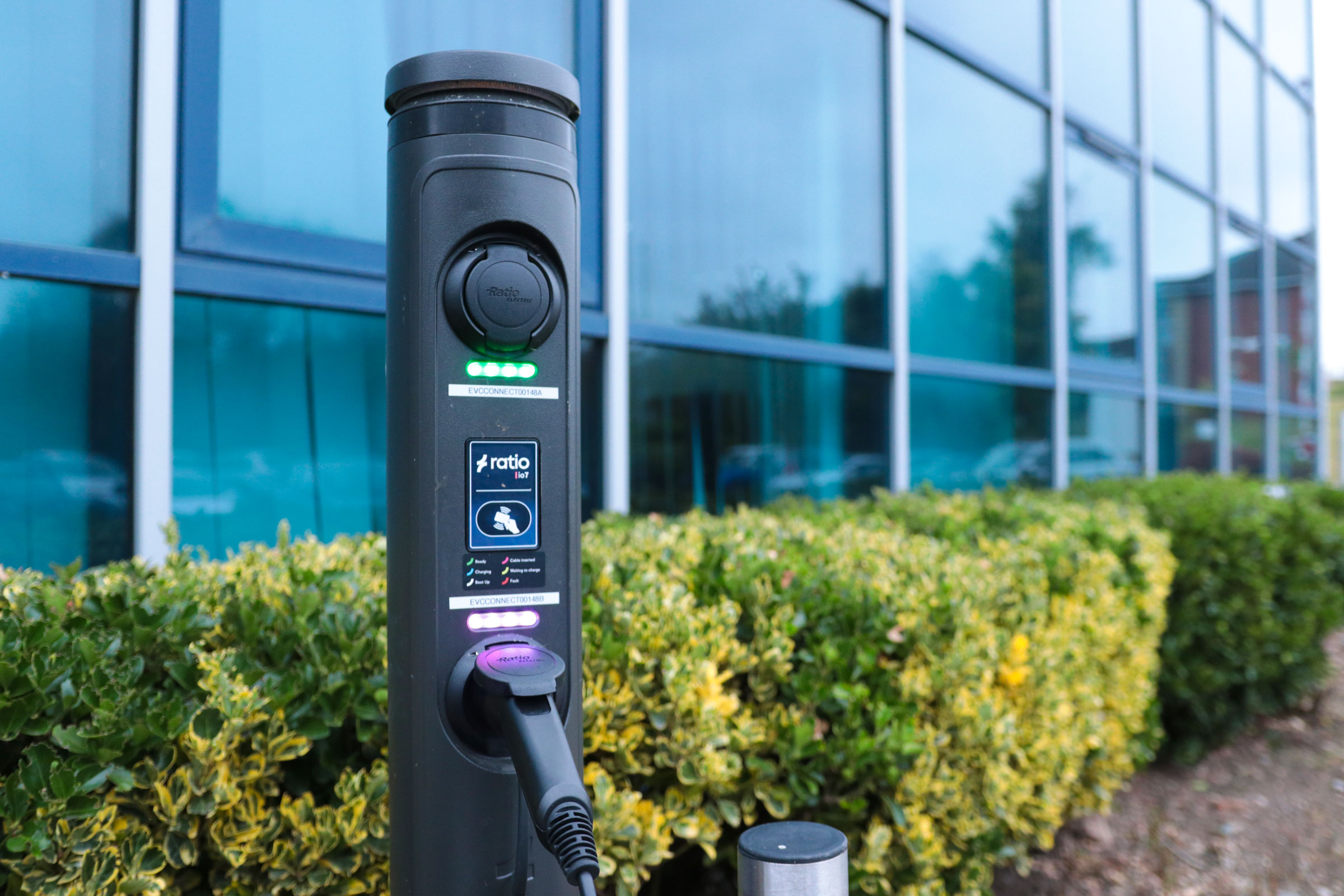
Now, the UK Government has made that decision easier.
Through the Office for Zero Emission Vehicles (OZEV), the Workplace Charging Scheme has been extended until 31 March 2027, with grant values increasing from £350 to £500 per socket from 1 April 2026; a rise of over 40%.
For businesses, charities and public sector organisations, this is a clear signal:
The government wants you to move now, and it’s backing that ambition with funding.
For many multi-site businesses, that uplift alone can materially reduce capital costs, especially when installing scalable infrastructure designed for growth.
Other schemes (for landlords, renters and education establishments) have also been extended, but some infrastructure grants will close in March 2026. The direction is clear: simplification, higher value, and a defined window to act.
Government has also stated it will aim to provide four weeks’ notice before any future changes, reinforcing that this is a defined opportunity.
The funding matters. But the operational and commercial case matters even more.
Recent analysis of over one million charging sessions by Fuuse found the average workplace charging cost is 25.9p per kWh.
That’s:
For employees without driveways, workplace charging can be the difference between adopting an EV or not.
For employers, it delivers:
With nearly 70% of the UK commuting workforce travelling by car, workplace charging isn’t niche, it’s strategically positioned.
Grants reduce upfront cost.
They don’t solve infrastructure complexity.
Common business concerns include:
This is where many organisations hesitate.
And this is where guidance matters.
At EVC Solutions, we see our customers as the heroes of their electrification journey.
You’re balancing operational uptime, budget approval, ESG reporting, and long-term resilience.
Our role is to simplify the pathway:
Understand your fleet plans, staff demand and growth forecasts.
Assess real electrical capacity and identify smart load management opportunities.
Engineer a scalable, grant-compliant charging solution, not just for today, but for 3–5 years ahead.
Deliver safely, efficiently and with minimal disruption.
Provide charge point management, tariff flexibility, reporting and ongoing optimisation.
The result is a solution that secures the grant and delivers operational value long after it’s claimed.
While the grant increases from £350 to £500 per socket in April 2026, infrastructure grants for certain schemes close in March 2026.
Businesses planning phased rollouts should be mapping timelines now to:
Waiting until the final quarter risks delays, installer bottlenecks, and rushed decision-making.
The UK government has reduced eight schemes down to five, simplifying the framework and signalling a more structured EV support landscape.
The message is clear:
Workplace charging is central to the UK’s EV transition.
And for businesses, it’s no longer just about sustainability.
It’s about:
The funding window is open.
The economics are improving.
The infrastructure must be designed properly.
If you're considering workplace charging, for fleet, staff, or both, now is the time to structure the plan.