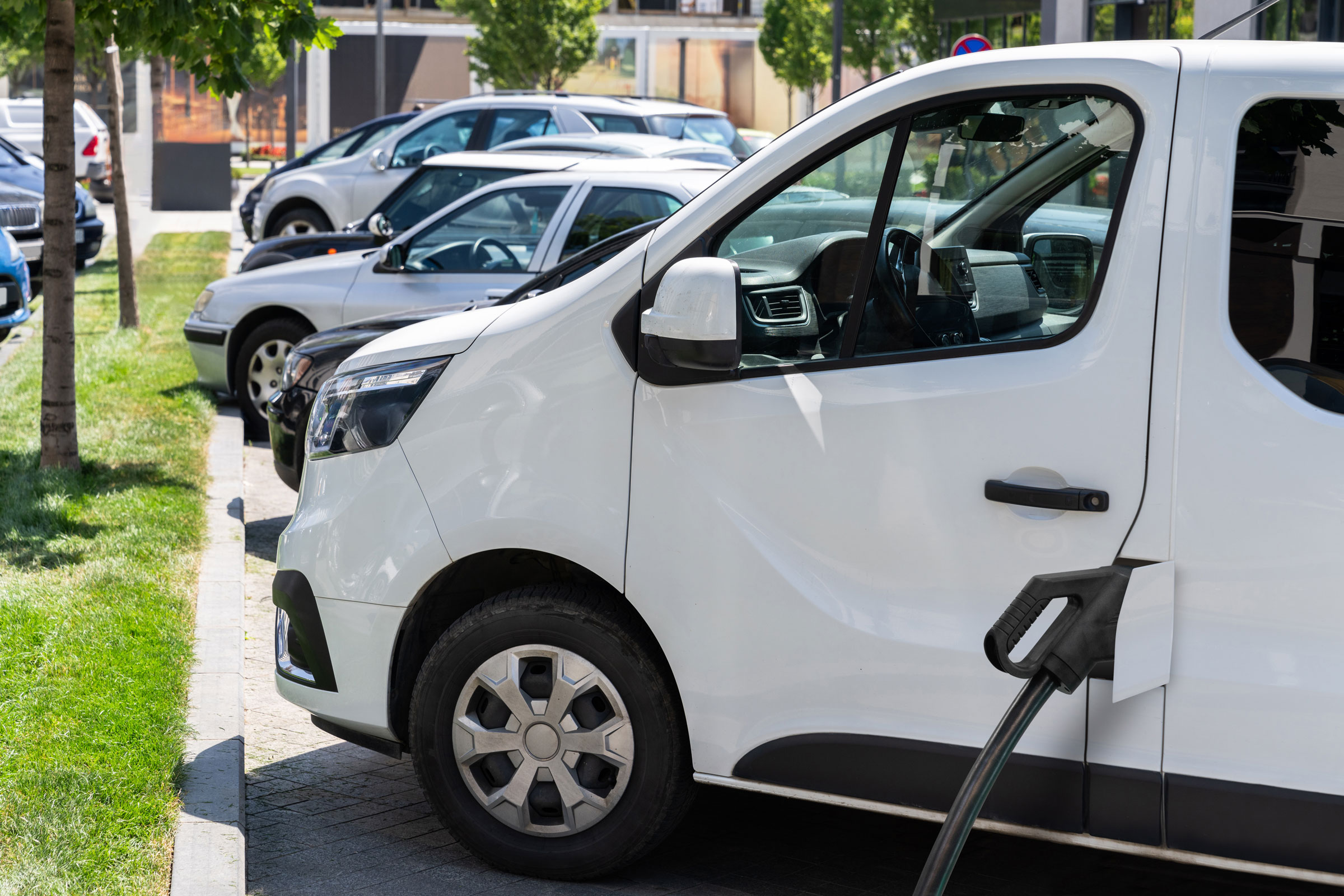
But switching a van fleet is not the same as swapping one diesel for another. The vehicle is only half the decision. The other half is electric van fleet charging. Where will each van charge? When? And will the charging fit the work the van has to do?
Fleet operators should not treat charging as somebody else's problem. They should see themselves as active participants in building the infrastructure their vehicles need. That participation starts closer to home than many people expect.
Public charging has grown quickly. Government figures show 121,171 public chargers in the UK as of 1 July 2026. Of those, 28,887 are rapid or ultra rapid.
For vans, numbers on a map do not tell the whole story. A bay designed for a hatchback may not take a long wheelbase van. It may not suit a van towing a trailer. It may not suit a van fitted with an elevating work platform. The position of the charge point matters. So do the bollards around it, a nearby wall or an access gate. Any one of these can make a site unusable for a working vehicle.
London Councils and Transport for London have been researching this issue since 2025. Their work looks at how well existing charge points suit light commercial vehicles. Wider research points the same way. A survey by EVA England found that 47% of drivers had experienced accessibility difficulties on the public network. Heavy cables, cramped bays and poorly placed equipment were among the problems reported.
This is where fleet managers' knowledge matters. They know the routes, where vans park and how long they stay, and the schedules drivers must keep. Sharing that knowledge with local authorities helps direct public investment towards sites that genuinely work for commercial vehicles.
A balanced view needs to acknowledge why many operators are still holding back.
Uptake remains below target. So far in 2026, electric vans account for 11% of new van registrations. The target for this year is 24%. The SMMT points to higher upfront costs and insufficient charging provision as the main reasons.
Public charging can be expensive. Dawsongroup vans estimates public rapid charging at around 18p to 28p per mile, and sometimes far higher. Diesel costs roughly 20p to 25p per mile. A fleet that relies heavily on public rapid chargers can watch most of its fuel saving disappear.
Some incentives have narrowed. Electric vans now pay the same flat rate of Vehicle Excise Duty as diesel vans. The Cleaner Vehicle Discount on the London Congestion Charge ended in December 2025.
Grid connections take time. EY puts typical connection timescales at 18 to 36 months. Some depots report much longer waits.
Not every duty cycle suits electric today. Long rural routes, heavy towing and very high payloads remain harder cases.
These are real concerns. They deserve honest answers. Most of them lead back to the same place.
The biggest variable in the cost of running an electric van is where it charges. Charged at a workplace or depot, Dawsongroup vans puts the cost at around 5p to 9p per mile. That is roughly a third of the diesel figure.
Research from EY and Eurelectric found that electric vans in the UK deliver operating cost savings of around 38% compared with diesel. Servicing needs are lower because there are fewer moving parts. Benefit in Kind on an electric van is zero. Each of these strengthens the case.
Large operators are proving it at scale. Royal Mail recently unveiled its 9,000th electric van. Nearly a third of its delivery routes are now zero emission. Forty four of its depots are fully electric.
Electric vans pay off when charging is planned around how the fleet actually works. For most fleets, that means the depot.
Public charging has a role. It helps with topping up, with unexpected detours and with vehicles that roam widely. But it should rarely be the foundation of a working fleet.
A depot you control gives you something the public network cannot. Certainty. You know the bays fit your vehicles. You know the chargers will be free when your vans return. You pay a business electricity rate rather than a public tariff.
Getting the depot right means answering some practical questions first. How far does each vehicle travel in a typical day? How long does it sit at base? How much power is available on site today? How will demand grow as more vans switch? Which vehicles need faster charging, and which can charge slowly overnight?
These answers shape everything. They decide how many chargers you need. They decide what power each should deliver. They reveal whether your supply can cope.
Where grid capacity is tight, load management can make a real difference. It shares the available power across vehicles according to need. That often allows a site to support more chargers without an immediate supply upgrade. EY also highlights integrated battery storage and flexible connection agreements as ways to shorten lead times.
Cost is one of the most common barriers. The Government's Depot Charging Scheme is designed to address it.
The scheme is part of a £170 million programme running to 2030. Its first window for 2026 closed in June. It covered 70% of charge point and civil costs, up to £1 million per organisation across all sites. Grid connection and substation costs were not included.
The next application window is expected to open on 28 October 2026 and close on 29 January 2027 (the grant rate for that window has not yet been confirmed). Government has said rates will reduce over the life of the programme. Applications are assessed on a first come, first served basis. Each organisation can submit only one.
For fleets planning to add electric vans in the next year or two, now is the time to prepare. A strong application needs a clear picture of your site, your vehicles and your power supply.
Smaller sites may also benefit from the Workplace Charging Scheme. It runs for a final year until 31 March 2027, at up to £500 per socket.
The depot is the foundation. It is not the whole picture.
Kerbside charging is developing quickly. It may suit drivers who take vans home at night. Shared charging is emerging too. The Association of Fleet Professionals has backed a platform that lets fleets offer spare depot charging to other operators. For businesses with chargers already installed, spare capacity could become a source of income.
Fleet operators can also influence public provision directly. Talk to your local authority. Explain where your vehicles need to charge. Explain how much physical space they need. Local authorities, charge point operators and businesses all have a part to play. The more they talk, the better the network will serve the vehicles that keep the economy moving.
For many duty cycles, the electric van is ready. The real question is whether the charging is ready.
EVC Solutions helps fleet operators answer that question properly. The team assesses your site, your power supply and your vehicles before recommending anything. The result is infrastructure designed around how your fleet works, with support through the funding process.
To talk through your depot before the next Depot Charging Scheme window opens, contact Adrian Cooper on 03300 904030.
See What's Possible.