Zero-Emission HGV Uptake Surges 341% But Infrastructure Now Determines What Happens Next

The latest SMMT data brings rare optimism to a challenging HGV market: zero-emission HGV registrations have quadrupled, rising 341% in Q3 and hitting the highest quarterly volume ever recorded. Britain is now Europe’s second-largest ZEV HGV market by volume, with year-to-date registrations up 145.8%.

With more than two dozen electric truck models now available, manufacturers have delivered what operators have long asked for: credible, operationally capable vehicles across a mix of use cases.

But while ZEV demand climbs, the broader HGV market continues to contract. Total registrations fell 14.5% in Q3; the fifth consecutive quarterly drop. Economic pressures, rising insurance costs, and driver shortages all play a part.

Yet across both articles and industry commentary, one message is louder than the rest:

Infrastructure is now the single biggest barrier to fleet decarbonisation

Despite the positive news, SMMT and fleet leaders all stress the same concern:
the pace of HGV electrification is now limited by depot charging and grid readiness.

Key warnings include:

The message is clear:
vehicle technology is no longer the obstacle; charging infrastructure is.

Why fleets remain cautious despite rising ZEV availability

Although electric HGV adoption is accelerating, operators are still grappling with:

These are precisely the challenges that prevent electrification from moving beyond isolated pilots into full fleet transition.

And this is where the right infrastructure partner becomes critical.

How EVC Solutions Helps Fleets Move from Ambition to Execution

At EVC Solutions, we understand that the transition is complex, not because vehicles aren’t ready, but because infrastructure planning demands expertise, technical depth, and a clear roadmap.

Our end-to-end model gives fleet operators structured, confident progress:

1. Consultation

We analyse fleet profiles, duty cycles, operational patterns, and strategic goals.

2. Survey

On-site grid assessments, load studies, and analysis of depot layout and constraints.

3. Design

A tailored infrastructure plan that’s scalable, compliant, and future-proof, not just a “number of chargers”.

4. Installation

Delivered by experienced specialists, with minimal operational disruption.

5. Management & Support

Ongoing optimisation, monitoring, reliability checks, and full lifecycle support.

This clarity is what allows operators to move from uncertainty to confident investment, even in a changing policy and economic environment.

The UK’s HGV transition is accelerating, but it depends on infrastructure

The surge in zero-emission HGV registrations is an important milestone.
But the future growth the UK needs will only happen if infrastructure stops lagging behind.

With the right planning, expert installation, and long-term support, fleets can stay ahead of policy shifts, manage costs, and build a reliable pathway to decarbonisation.

Ready to explore what’s possible for your fleet?

Book an appointment today and see what’s possible.
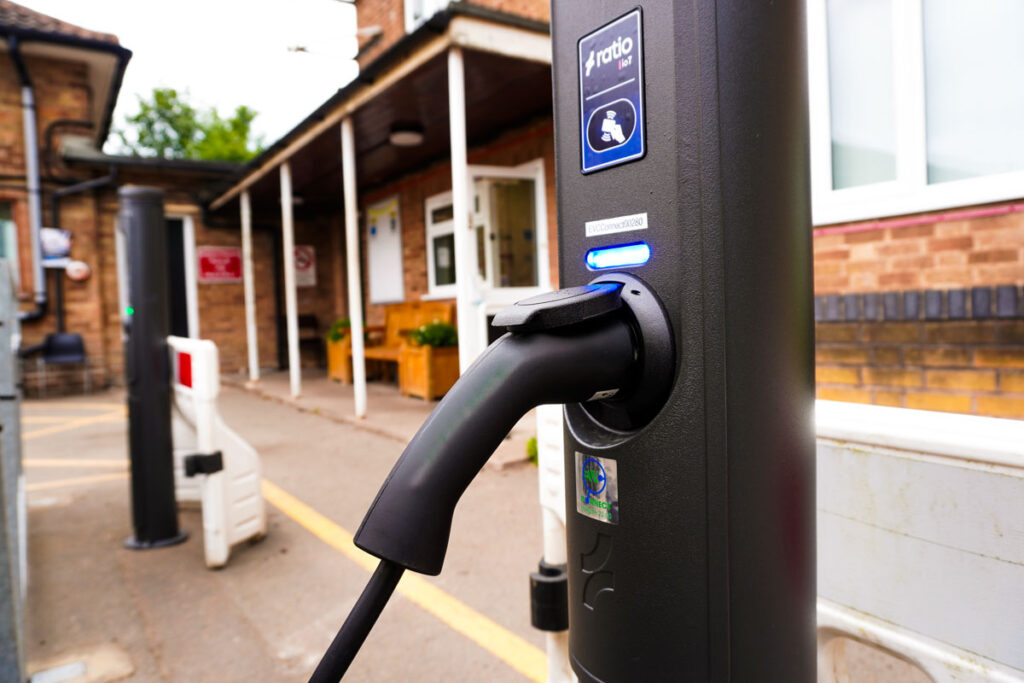
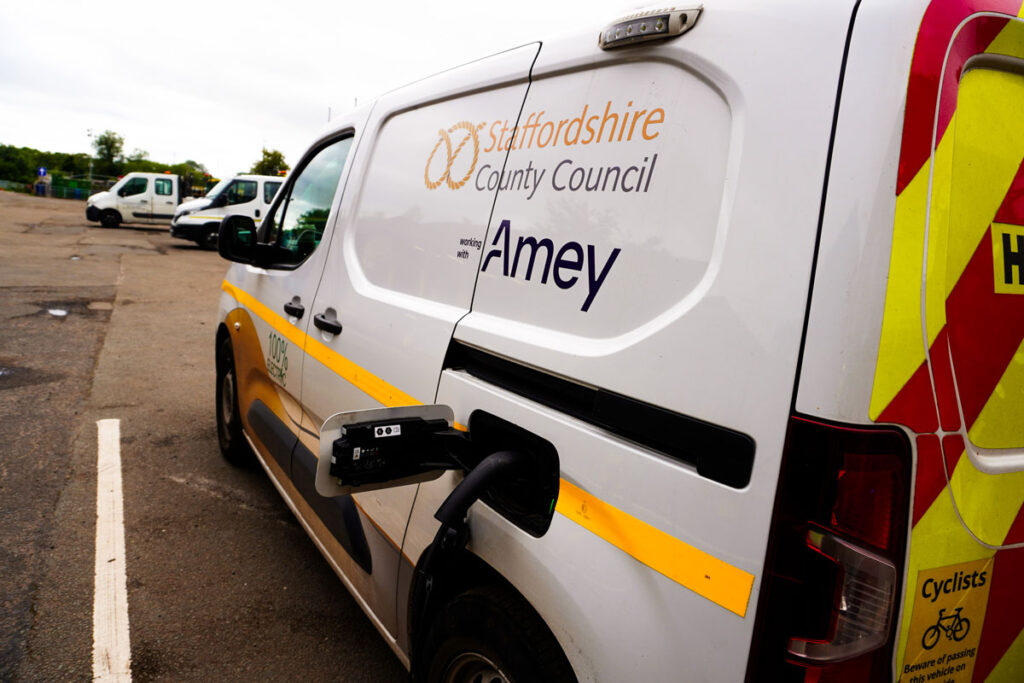
EV Fleet Charging

Project Overview

Client: Amey Highways, in partnership with Staffordshire County Council
Sector: Highways Maintenance and Infrastructure
Installation: 2 x 22kW Ratio EV io7 single-socket pedestal chargers
Location: Staffordshire
Charge Point Management System: EVC Connect
Completion Time: 3–4 weeks from contract approval
Technology: Fully load-balanced system for optimal power use

Amey Highways, a global leader in infrastructure services, manages everything from bridge design to road maintenance across the UK and beyond. Working with Staffordshire County Council, the team has been at the forefront of the UK’s push toward zero-emission transport, actively exceeding government ZEV (Zero Emission Vehicle) mandates.

However, the road to electrification wasn’t straightforward. Like many fleet operators, Amey initially relied on slow three-pin charging, which limited operational flexibility and created range anxiety among drivers. With a growing electric fleet and the need for more reliable, data-driven charging infrastructure, Amey partnered with EVC Solutions to deliver a smarter, future-proof EV charging solution.

The Challenge

Amey faced three key challenges:

  1. Limited charging capacity – Existing infrastructure offered only slow charging via domestic-grade sockets. Vehicles often required overnight charging and caused operational delays.
  2. Range and downtime issues – Supervisors and technicians often travel across large areas of Staffordshire. With a 120-mile range on some fleet vehicles, time spent waiting to charge on public networks became a major productivity loss.
  3. Lack of visibility and control – Without a proper back-office system, Amey had no insight into who was charging, how long vehicles were plugged in, or how efficiently chargers were being used.

Amey and Staffordshire County Council needed a partner who could not only install chargers but also manage the end-to-end process, from initial survey and design through to installation, management, and ongoing support.

The EVC Solution

EVC Solutions conducted a full site survey and identified that the original plan for 7kW chargers would severely limit operational efficiency. Using advanced load balancing (EVC Load Management), the EVC team re-engineered the design to safely deliver two 22kW Ratio EV io7 pedestal chargers, without overloading the site’s electrical capacity.

The result: faster, smarter charging that met both current fleet requirements and future scalability goals.

The installation was completed within three to four weeks of contract approval, with minimal disruption to site operations. EVC Connect, EVC’s intelligent charge point management platform, was deployed to provide real-time visibility, remote monitoring, and data reporting across the charging network.

The Results

1. Operational Efficiency

Charging times have been reduced dramatically. Vehicles can now be recharged quickly during normal work hours, often while staff complete admin tasks, cutting downtime and improving fleet utilisation.

“Everything is so much better, so much quicker. It’s changed the operational way we work dramatically.”
Neil Thorneycroft, Transport Manager, Amey Highways

2. Full Visibility and Control

With EVC Connect, Amey now has complete oversight of its EV charging infrastructure. The system tracks utilisation, energy usage, and charging behaviour in real time, allowing the team to optimise operations and plan for future expansion.

“We can see exactly who’s charging, when, and for how long. We’ve never had that level of visibility before.”
Neil Thorneycroft

3. Seamless User Experience

Each driver now has an RFID card linked to their vehicle. The process is simple: tap, plug, go. The system integrates smoothly with Amey’s operational processes, providing both convenience for drivers and robust data for management.

4. Smarter Energy Management

By introducing load balancing, EVC Solutions enabled Amey to upgrade to higher-capacity chargers without costly infrastructure reinforcement. This ensures faster charging and better energy efficiency, future-proofing the depot for continued EV growth.

“The original survey said we could only have 7kW chargers. EVC came in, did their own survey, and showed us how to safely upgrade to 22kW. That’s made a huge difference.”
Neil Thorneycroft

5. Cost and Carbon Savings

Amey’s business case now demonstrates clear financial and environmental returns. The company can track cost savings per mile versus diesel vehicles and has clear evidence of progress toward its sustainability goals.

“After a certain mileage, you’re literally saving money compared to diesel. The numbers speak for themselves.”
Neil Thorneycroft

The Outcome

Since installation, Amey’s depot has been operating efficiently, with positive feedback from staff and measurable improvements in uptime, cost control, and sustainability reporting. The system’s scalability and robust management features have positioned Amey and Staffordshire County Council to confidently expand their electric fleet in the months ahead.

“The team are over the moon. It’s been so smooth from start to finish, and now we’re ready to order more EVs.”
Neil Thorneycroft

EVC Solutions: Your Partner in Fleet Electrification

EVC Solutions delivers end-to-end EV infrastructure for businesses and local authorities, from consultation and survey through to design, installation, management, and ongoing support. Our expertise ensures your EV investment is seamless, reliable, and future-proof.

Book an appointment today and see what’s possible.
Beyond the Trend: Why EV Adoption Is Simply Better Business

For years, conversations around electric vehicles have sounded futuristic, even idealistic.
But that narrative is outdated.

Across the UK, a quiet shift has taken hold in boardrooms, fleet depots, and hotel car parks. Businesses are no longer asking if they should go electric, but how fast they can make it happen.

Because EV adoption isn’t a trend anymore. It’s an upgrade.

The Business Case Has Flipped

Fleet managers, hospitality operators, and property developers aren’t moving to EVs to “go green” or chase headlines. They’re doing it because it’s the only model that scales sustainably, financially, operationally, and reputationally.

Businesses that have already made the switch know: once you’ve lived in the world of clean mobility, it’s hard to imagine ever going back to fumes and friction.

From Compliance to Competitive Advantage

What started as a sustainability target has become a competitive differentiator.

Fleet operators are using EV transition to reduce downtime and improve reliability. Hotels and leisure operators are attracting higher-value guests by offering EV charging as a premium service. Developers are embedding charging infrastructure early to future-proof assets and meet planning requirements with ease.

And as regulation tightens, from the UK’s Zero Emission Vehicle (ZEV) mandate to expanding Clean Air Zones, those ahead of the curve will find themselves with both compliance and commercial advantage.

Simply put: the companies that act now will own the space later.

Why EVC Solutions Exists

At EVC Solutions, we make the transition to EVs simple, strategic, and sustainable.

We guide every client through a clear, five-step journey:

  1. Consultation – understanding your goals and operations
  2. Survey – assessing your site, grid capacity, and opportunities
  3. Design – creating a bespoke infrastructure plan that scales
  4. Installation – delivering safely, efficiently, and with minimal disruption
  5. Management & Support – monitoring, optimising, and maintaining long-term reliability

It’s not just about installing charge points. It’s about giving you the confidence that your investment is future-proof, technically, financially, and reputationally.

A Smarter Standard

Transitioning to EVs isn’t about chasing innovation for its own sake.
It’s about making business simpler, cleaner, and smarter.

The companies moving first aren’t experimental. They’re pragmatic.
They’ve seen the data, tested the technology, and understood that sustainability and profitability are no longer opposites, they’re the same path.

At EVC Solutions, we help you walk it with confidence.

Book an appointment today and see what’s possible.

EV Transition Reaches a Tipping Point: Falling Costs, Stronger Incentives, and Fleet Innovation Driving Change

For years, the transition to electric vehicles (EVs) has been framed as something 'just around the corner.' But recent developments suggest the corner has finally been turned. From falling vehicle prices and growing government incentives, to record-high adoption rates and innovative fleet strategies, the UK is entering a new phase where electrification makes both economic and operational sense.

Prices Are Normalising

Once considered a premium choice, EVs are now closing the cost gap with petrol and diesel models. Industry data shows the upfront price difference between new EVs and their internal combustion engine (ICE) equivalents has fallen to under 20% (the lowest on record). Several models are now available below £20,000, with a wide range of mainstream fleet choices priced in the £28,000–£35,000 bracket.

Meanwhile, used EV values have stabilised, creating a predictable second-hand market and a solid base of buyers. For fleet operators, this marks a turning point: whole-life costs are now competitive without having to rely solely on environmental or tax benefits to justify the business case.

Incentives Are Catalysing Change

Government grants and funding schemes are proving crucial in accelerating adoption. The Electric Car Grant has prompted manufacturers to cut prices and introduce new models under £37,000, driving demand and ensuring greater affordability.

For fleets, the urgency is even greater. The Depot Charging Scheme (DCS) covers up to 75% of depot chargepoint installation costs (up to £1m per organisation), but applications close in November. Those who delay risk missing out on significant funding support. Further deadlines for workplace charging schemes are approaching in early 2026, meaning operators must act now to avoid higher costs later.

Charging and Infrastructure Are Key

While prices are falling, charging availability remains the single biggest adoption trigger. Drivers without driveways or off-street parking still face a 'charging divide,' highlighting the need for expanded kerbside, workplace, and depot infrastructure. Businesses that invest in reliable, future-proof charging will gain a commercial advantage while also helping to close this accessibility gap.

Fleets Leading the Way in Sustainability

Major businesses are already proving what’s possible. AkzoNobel, for example, is rolling out electric heavy goods vehicles (eHGVs) alongside a nationwide fleet powered by hydrotreated vegetable oil (HVO). In partnership with XPO Logistics, the initiative will cut annual fleet emissions by more than 50%, saving 3,000 tonnes of CO2, which is the equivalent of removing over 650 passenger cars from UK roads.

This dual approach demonstrates how fleets can balance urban electrification with nationwide decarbonisation, achieving immediate, measurable emissions reductions while preparing for a zero-emission future.

The Message Is Clear

The UK EV market is no longer waiting for its tipping point. It's happening now. Falling prices, stabilising residuals, strong government support, and innovative fleet leadership are aligning to make electrification the logical choice.

For businesses, the opportunity is twofold: lower operating costs and stronger sustainability credentials. But timing is critical. Those who act decisively today by securing funding, upgrading infrastructure, and modernising fleets, will not only stay compliant but also gain a competitive edge in tomorrow’s low-carbon economy.

The transition to electric isn’t a future challenge anymore. It’s today’s business opportunity.

Book an appointment today and see what’s possible.

Busting EV Myths: Why Accurate Information and Reliable Charging Infrastructure Are Key to Adoption

A new nationwide study by char.gy has highlighted something we at EVC Solutions see every day: misinformation remains one of the biggest barriers to EV adoption.

The report, What Everyone Should Know About EVs, shows that simple fact-based statements such as “EV batteries last 10–15 years”, significantly increase drivers’ willingness to consider going electric. Yet, despite advances in technology and infrastructure, outdated myths around range, cost, and charging availability still dominate public perception.

Key Findings from the Report

Why This Matters for Businesses and Fleets

The findings are clear: charging availability and reliability are now the decisive factors for EV adoption. For businesses and fleets, this presents both a challenge and an opportunity.

At EVC Solutions, we make sure your business doesn’t get left behind in this transition. By providing end-to-end charging infrastructure, from consultation and survey through to design, installation, and ongoing management, we remove uncertainty and future-proof your investment.

Our Promise

We simplify the journey into five clear steps:

  1. Consultation – understanding your needs and goals.
  2. Survey – assessing your site and opportunities.
  3. Design – creating a bespoke charging solution.
  4. Installation – delivered with precision and reliability.
  5. Management & Support – ensuring your system runs smoothly long term.

With misinformation rife, the businesses that act decisively on charging infrastructure will be the ones who not only support their drivers but also strengthen their sustainability credentials and stay ahead of regulation.

At EVC Solutions, we believe no one should lose their job for choosing the wrong EV charging partner. We deliver certainty in an uncertain market.

Book an appointment today and see what’s possible.

Fleet Electrification in 2025: Why Charging Infrastructure is the Missing Piece

The conversation around electric vehicles (EVs) in the UK has moved from if to how fast. With government mandates, falling vehicle costs, and stronger infrastructure in place, fleets now sit at the centre of the transition.

But the reality is more complex: hesitancy remains, costs still weigh heavily, and many managers are unsure how to balance compliance, cost, and practicality.

At EVC Solutions, we specialise in helping fleet and depot operators cut through that complexity, designing and delivering reliable charging infrastructure that makes EV adoption seamless and future-proof.

Fleets Face Pressure and Opportunity

Four recent reports highlight both the urgency and the barriers:

Why Infrastructure is the Key

Many businesses delay electrification because of uncertainty:

The answer lies in smart, well-planned infrastructure. With the right system in place, fleets gain:

How EVC Solutions Helps

We provide an end-to-end service tailored to fleets and depot operators:

  1. Consultation – understanding your fleet, routes, and operational pressures.
  2. Survey – assessing depot power capacity and site-specific opportunities.
  3. Design – building a bespoke, scalable charging plan.
  4. Installation – precise, reliable delivery with minimal disruption.
  5. Management & Support – monitoring, optimisation, and driver support.

We also guide clients through funding schemes like the Workplace Charging Scheme and fleet infrastructure grants, ensuring you maximise available support.

The Bottom Line

The EV transition isn’t a future challenge, it’s today’s reality. Fleet managers who act now will benefit from:

Book an appointment today and see what’s possible.

Fleet Electrification Without the Wait: Overcoming Grid Connection Bottlenecks

For fleet managers across the UK, the pressure to transition from diesel to electric vehicles is mounting. Sustainability commitments, emissions regulations, and rising fuel costs are all driving the shift. But one major obstacle is slowing progress: grid connection delays.

According to the Department for Energy Security and Net Zero, some businesses face waits of up to 15 years to secure a grid connection for EV charging infrastructure. For logistics, delivery, and bus operators, that kind of delay isn’t just frustrating, it’s commercially unworkable.

So, how can businesses keep their decarbonisation plans on track without waiting over a decade?

Alternative Power Solutions for Fleets

Recent industry developments have highlighted the role of biogas-powered fuel cells and battery storage as a 'bridge' to electrification. These systems generate reliable, off-grid electricity, helping fleets start their EV journey without waiting for grid upgrades.

It’s clear that alternative energy solutions can play a role in unlocking stalled EV adoption. But they’re only part of the picture. The real challenge is knowing which strategy is right for your fleet and how to implement it seamlessly.

Why a Strategic Approach Matters

The transition to zero-emission fleets isn’t just about plugging in chargers. It requires a careful, structured approach that balances energy supply, operational needs, and future growth. At EVC Solutions, we’ve seen too many businesses hesitate because the path forward feels uncertain. That’s why we provide a proven five-step journey:

  1. Consultation: Understand your fleet’s needs and decarbonisation goals.
  2. Survey: Assess your site’s infrastructure, energy demands, and opportunities.
  3. Design: Create a bespoke EV charging plan that’s scalable and future-proof.
  4. Installation: Deliver high-quality, reliable infrastructure with minimal disruption.
  5. Management & Support: Monitor, optimise, and maintain your system for peace of mind.

This framework means your investment isn’t just about solving today’s challenges, it’s about building a solution that works for the long term.

The ROI of Acting Now

Delaying electrification comes with hidden costs: rising fuel expenses, lost opportunities for sustainability leadership, and the risk of falling behind competitors. By contrast, businesses that act now can:

Even where grid connections are delayed, EVC Solutions helps clients explore phased strategies, interim power solutions, and funding opportunities to keep progress moving.

Future-Proof Your Fleet with EVC Solutions

Fleet electrification is a complex journey, but you don’t have to navigate it alone. At EVC Solutions, we simplify the process, providing clear advice, bespoke designs, and end-to-end delivery so you can electrify with confidence.

Whether you’re considering interim solutions like fuel-cell power or planning for a large-scale depot upgrade, we’ll make sure your charging infrastructure is reliable, compliant, and future-ready.

Don’t wait 15 years for the grid. Book an appointment with EVC Solutions today and see what’s possible.

The Real Cost of Driving Electric in the UK: What Business Owners Need to Know

You’ve probably heard it said that electric vehicles (EVs) are expensive to buy and complicated to charge. But according to the most comprehensive EV cost analysis ever conducted in the UK, the real story is quite different.

The Cost of Driving Electric 2025 report by Electric Vehicles UK and New AutoMotive unpacks the true financial picture, and the results are eye-opening for business owners considering switching their fleets or installing EV charge points.

Here’s what stood out to us at EVC Solutions:

1. The majority of EV owners are saving money

More than 80% of EV buyers in 2025 are expected to save money over the life of their vehicle compared to an equivalent petrol or diesel car. The average saving? A whopping £5,850 over the full ownership term​.

2. Charging at home? The savings are even bigger

EV drivers with home charging access are winning. In 90% of scenarios studied, these drivers saved money. And even those relying on public charging could still come out ahead, especially when using lower-cost community charging networks like Co Charger​.

3. Used EVs are now cheaper to buy than petrol cars

A standout revelation: 80% of used EV models analysed are cheaper to buy upfront than their petrol or diesel equivalents. Some are even £5,000–£10,000 cheaper​.

This is big news for SMEs, local fleets, and businesses who are looking at EVs for staff or pool vehicles. The used EV market is maturing, and the cost of entry is falling.

4. But public charging costs are holding people back

For drivers without off-street parking, the cost of public charging can erode savings. This is now seen as the biggest barrier to adoption, and a clear opportunity for businesses with premises and car parks to install EV chargers and serve this growing market​.

5. The opportunity: install charge points and serve a growing market

There are two ways business owners can benefit from the EV transition:

With 500,000 new EVs and 250,000 used EVs expected to be sold in the UK this year, demand for smart, accessible charging is only going one way​.


See What’s Possible with EVC Solutions

Whether you're a business with a car park, a landlord with tenants, or a company looking to electrify your fleet, there's never been a better time to act. The savings are real. The demand is growing.

Let’s explore how EV charging could work for you.
See what’s possible. 

Contact EVC Solutions today to see what’s possible for your business and make the switch to a cleaner, greener future.

What the New ZEV Mandate Means for the UK’s EV Industry

The UK Government’s recent update to the Zero Emission Vehicle (ZEV) Mandate confirms a core truth: the future is still electric – but the road to get there is shifting.

After months of speculation, the government has reaffirmed the 2030 ban on new petrol and diesel cars while introducing greater flexibility for hybrid sales and manufacturing targets. Hybrids – including plug-in and full hybrids – will now be allowed until 2035, giving manufacturers more time to scale up battery-electric vehicle (BEV) production. Alongside this, small and niche manufacturers, like McLaren and Aston Martin, are now exempt from the rules entirely.

So, what’s really changed – and what does it mean for the EV infrastructure sector?

The Good News: The 2030 Deadline Is Still in Place

For the EV industry, consistency in policy is crucial. The reconfirmed 2030 target gives drivers, fleet managers, and businesses the long-term direction they need. It means we can continue building the infrastructure, services, and supply chains needed to support an all-electric future.

And there’s growing demand to match this ambition. EV sales in March 2025 were up 40% year-on-year, demonstrating strong consumer appetite, despite economic and political headwinds.

The Challenge: Flexibility or Uncertainty?

By allowing the sale of hybrids until 2035 and reducing fines for manufacturers who miss EV sales targets, the government says it’s being pragmatic – but critics argue that these changes risk slowing down the momentum.

For infrastructure providers like EVC Solutions, clarity and confidence are essential. Investment in charging networks must align with the growth of EV adoption. The more blurred the transition becomes, the harder it is for us – and the wider industry – to plan ahead.

What’s Needed Now?

The government has promised tax breaks and investment in manufacturing and infrastructure. That’s encouraging, but words must be matched with swift action:

A Moment of Opportunity

This is a critical moment for the UK’s EV industry. The mandate changes give manufacturers room to breathe – but also raise serious questions about long-term ambition.

As Quentin Willson of FairCharge rightly put it, this is a mighty step forward in recognising Britain as a major EV player. But if we want to lead globally, we must invest boldly, communicate clearly, and move quickly.

At EVC Solutions, we’re ready. We’re already working with businesses, hotels, local authorities and workplaces to show what’s possible.

Now is the time to act – not hesitate.

Want to know how to prepare for the EV transition, despite policy shifts?
 Contact EVC Solutions today to see what’s possible for your business and make the switch to a cleaner, greener future.

Is Your Fleet Ready for the Electric Revolution? Overcoming Key Barriers to EV Adoption

The shift to electric vehicles (EVs) is no longer a distant future - it's happening now. With the UK government's ambitious plan to ban the sale of new petrol and diesel vehicles by 2030, businesses are under increasing pressure to transition their fleets to electric. However, this transition comes with its own set of challenges. Understanding these barriers is the first step toward overcoming them and ensuring your fleet remains competitive and compliant.​

1. High Upfront Costs

One of the most significant hurdles for businesses is the initial investment required for EVs. Electric vehicles often come with a higher purchase price compared to their internal combustion engine counterparts. This can be particularly daunting for small to medium-sized enterprises operating with tight budgets. However, it's essential to consider the total cost of ownership. EVs typically offer lower running costs, reduced maintenance expenses, and potential tax incentives, which can offset the initial expenditure over time. Exploring financing options and government grants can also alleviate the financial burden.​

2. Insufficient Charging Infrastructure

The availability and accessibility of charging stations remain a concern for many fleet operators. While the UK's charging network is expanding, gaps still exist, especially in rural areas. For fleets that operate nationwide, this can pose logistical challenges. Investing in on-site charging solutions can provide a reliable and convenient way to keep your vehicles powered. Additionally, collaborating with charging network providers to understand and influence the expansion plans can be beneficial.​

3. Range Anxiety and Operational Disruption

Range anxiety - the fear that a vehicle will run out of charge before reaching its destination - is a psychological barrier that affects both drivers and fleet managers. For businesses that rely on timely deliveries and services, the perceived risk of operational disruption is a valid concern. However, advancements in battery technology have significantly improved the range of modern EVs. Conducting a thorough analysis of your fleet's daily routes and distances can help determine if current EV models meet your operational needs. In many cases, EVs can comfortably handle typical daily mileage requirements.​

4. Knowledge Gaps and Stakeholder Buy-In

Transitioning to an electric fleet isn't just about swapping vehicles; it requires a shift in mindset and operations. Lack of knowledge about EV technology, benefits, and maintenance can lead to resistance among stakeholders. Engaging in educational initiatives, offering test drives, and showcasing successful case studies can help build confidence and facilitate smoother adoption. It's crucial to involve all stakeholders - from drivers to upper management - in the transition process to ensure collective buy-in.​

5. Grid Capacity and Energy Management

Integrating a fleet of EVs requires careful consideration of your facility's energy capacity. Multiple vehicles charging simultaneously can strain existing electrical systems, potentially leading to costly upgrades. Implementing smart charging solutions and energy management systems can optimize charging schedules, reduce peak demand charges, and ensure efficient energy use. Partnering with energy consultants can provide tailored strategies to address these challenges.​

6. Policy Uncertainty and Incentive Availability

The EV landscape is continually evolving, with government policies and incentives subject to change. Staying informed about current and upcoming regulations, grants, and tax benefits is vital for strategic planning. Engaging with industry associations and participating in policy consultations can also provide insights and influence favorable outcomes for fleet operators.​

Conclusion

Transitioning to an electric fleet presents challenges, but with careful planning and informed decision-making, these barriers can be overcome. At EVC Solutions, we specialise in guiding businesses through the complexities of EV adoption, offering tailored solutions that align with your operational needs and sustainability goals. Embrace the electric revolution today and position your fleet for a cleaner, more efficient future.​

Interested in setting up fast-charging infrastructure for your fleet or business?
At EVC Solutions, we help businesses see what’s possible. From smart load management to installing cutting-edge charging systems, we make EV adoption easy and cost-effective.

Ready to get started? Contact EVC Solutions today to see what’s possible for your business and make the switch to a cleaner, greener future.